
Author name: Krishan

Can Police Arrest.
Uncategorized

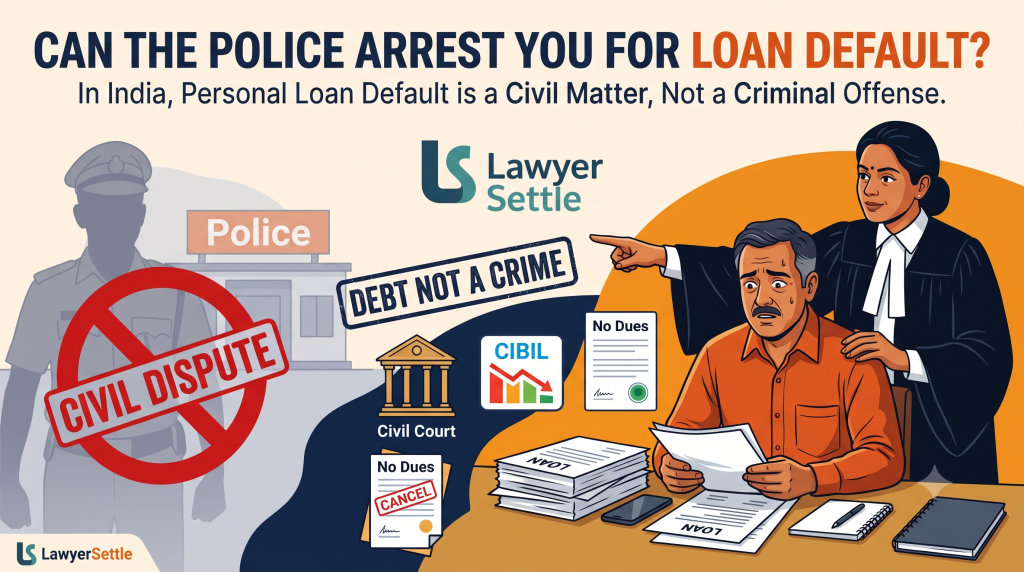
Can Police Arrest You for Not Paying a Personal Loan? Legal Facts & Borrower Rights.

A common fear among borrowers facing financial distress is whether missing personal loan payments can lead to a police visit or imprisonment. Collection agents frequently exploit this anxiety by threatening criminal cases, police complaints, or immediate arrest. In India, defaulting on a personal loan is generally a civil matter and does not, by itself, constitute a criminal offence. The police have no legal authority to arrest a borrower merely for failing to pay loan EMIs. Understanding how Indian law categorizes loan default, the narrow exceptions where courts intervene, and your rights under Reserve Bank of India (RBI) guidelines will help you protect yourself against unlawful intimidation. Why Loan Default Is a Civil Matter? When you take an unsecured personal loan, you enter into a commercial contract with a bank or Non-Banking Financial Company (NBFC). If you stop paying due to financial hardship—such as job loss, medical emergencies, or business distress—it is classified as a breach of contract, not a crime. What About the Arbitration Clause? Can It Lead to Arrest? When signing a personal loan agreement, you likely agreed to an arbitration clause. This clause allows the bank or NBFC to resolve disputes through a private arbitrator rather than a traditional civil court. Many recovery agents use arbitration notices to mislead borrowers into believing that an arbitral tribunal functions like a criminal court with powers to dispatch the police. Understanding the legal limits of arbitration clarifies what lenders can and cannot do: Exceptions: When Legal Proceedings Can Lead to Court Warrants. While missing an EMI is not a crime, criminal or quasi-criminal proceedings can arise under specific statutory conditions: Cheque Dishonour (Section 138 of the Negotiable Instruments Act). If you issued post-dated physical cheques for EMI repayment that bounced due to insufficient funds, the lender can initiate proceedings under Section 138 of the Negotiable Instruments Act, 1881: NACH / ECS Mandate Bounce (Section 25 of the PSS Act). Digital mandate bounces (National Automated Clearing House / Electronic Clearing Service) fall under Section 25 of the Payment and Settlement Systems Act, 2007. This functions similarly to Section 138 proceedings: it requires statutory notice, court filings, and summons. Arrest only enters the picture if court directives are routinely ignored. Threat Matrix: What Recovery Agents Say vs. What the Law Says, Common Recovery Threat. Legal Reality under Indian Law. We are filing an FIR at your local police station today. Police will reject an FIR for pure loan default; it is a civil breach of contract. Police officers are coming with us to seize your household items. Police do not assist recovery agents. Seizure without a formal court decree is illegal. Police do not assist recovery agents. Seizure without a formal court decree is illegal. No one can be jailed without due court trial and judicial orders. Unilateral arrest is impossible. Your PAN Card will be blocked. Purely fictitious intimidation. RBI Guidelines: Protection Against Intimidation and Harassment. The Reserve Bank of India strictly regulates debt collection methods. Regulated Entities (banks and NBFCs) and their recovery agents must follow the Master Directions on Fair Practices: What Steps Should You Take If Threatened with Arrest?

How to settle
Uncategorized

How to Settle a Personal Loan in India?

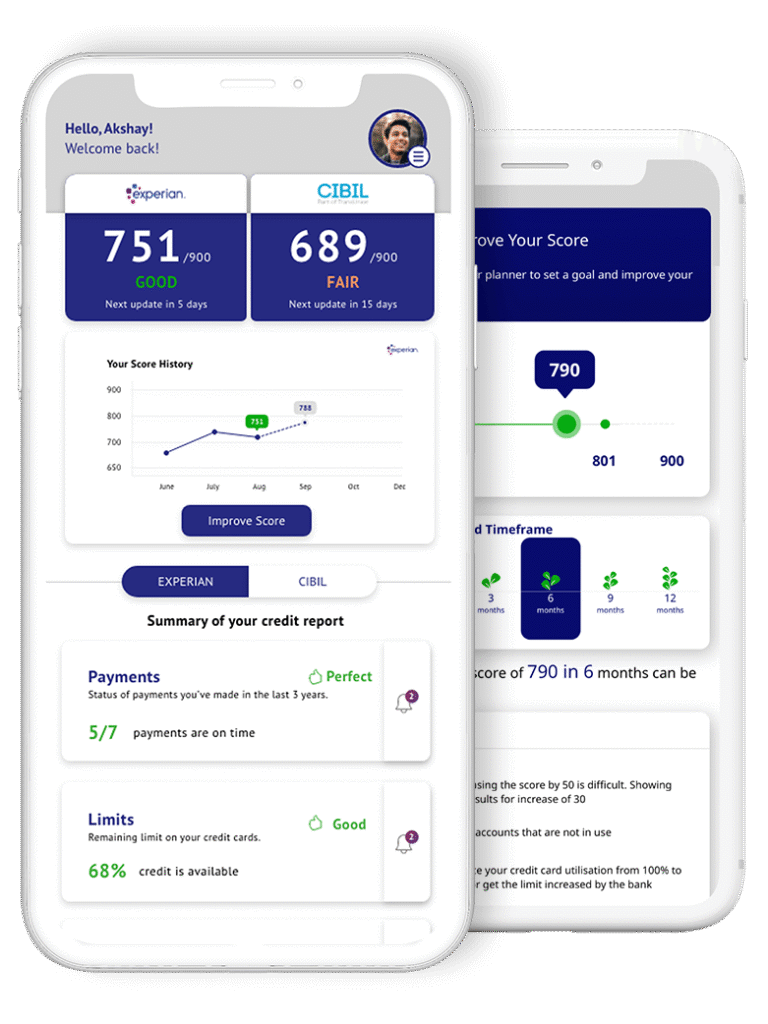
Facing an unexpected financial crisis—whether from job loss, medical emergencies, or business downturns—can make servicing unsecured debt overwhelming. When Equated Monthly Installments (EMIs) pile up alongside accumulating penal interest, many borrowers consider personal loan settlement. While loan settlement offers a legal exit route to become debt-free without facing insolvency, navigating the process requires a clear understanding of banking procedures, Reserve Bank of India (RBI) guidelines, and credit score implications. When Does a Bank Agree to a Settlement? Banks and Non-Banking Financial Companies (NBFCs) prefer recovering full dues. However, when an account turns into a Non-Performing Asset (NPA)—typically after 90 days of non-payment—lenders assess recovery viability. Lenders evaluate settlements under verifiable hardship conditions: Step-by-Step Procedure to Settle a Personal Loan. Assess Your Finances and Gather Proof. Calculate the total genuine principal balance excluding inflated late fees and penal interest. Compile hard documentation of your hardship (medical records, termination letter, bank statements, or income tax returns) to prove your inability to service regular EMIs. Approach the Lender in Writing. Submit a formal written proposal addressed to the branch manager, nodal officer, or retail asset recovery desk. State your inability to continue regular EMIs, detail the genuine hardship, and propose an initial One-Time Settlement (OTS) lump-sum amount (typically starting around 30%–40% of the outstanding principal). Negotiate the Settlement Terms. The bank’s recovery committee will review the proposal. Expect counter-offers. Stand firm on waiving penal interest, late payment penalties, and compounding charges. If you lack immediate liquidity, negotiate whether the settlement can be split across 2 to 3 structured tranches. Demand an Official Written Settlement Letter. Never transfer funds based solely on a verbal promise or recovery agent’s phone call. Ensure the bank issues an official Settlement Sanction Letter on official bank letterhead. Execute Payment and Obtain a No Dues Certificate (NDC). Transfer the funds strictly through traceable banking channels (NEFT/RTGS/Cheque) directly into your loan account—never to a third party or individual account. Within 15 to 30 days of payment, obtain the official No Dues Certificate (NDC) or No Objection Certificate (NOC) confirming legal discharge. How to Rebuild Credit Score after Settlement? A “Settled” remark remains on your credit report for up to seven years, signaling to automated underwriting engines that previous debt was partially written off. However, credit health can be systematically restored: How LawyerSettle Can Help. Navigating bank recovery committees, high-pressure collection calls, and legal demand notices under Section 138 of the Negotiable Instruments Act or Section 25 of the Payment and Settlement Systems Act requires professional legal intervention. LawyerSettle provides structured borrower advocacy:

Uncategorized

Loan Settlement in India: RBI Guidelines, Borrower Rights & What Recovery Agents Can and Cannot Do.

Missing EMIs on a personal loan, credit card or home loan can feel overwhelming, especially when calls from lenders and recovery agents begin. The good news: Reserve Bank of India (RBI) guidelines and Indian law protect borrowers, and loan settlement in India is a lawful way to resolve genuine financial hardship. Knowing your rights is the first step towards a fair and dignified outcome. What Is Loan Settlement? Loan settlement is an agreement in which the lender accepts a negotiated amount, usually less than the total outstanding dues, as full and final payment. It is common for unsecured loans such as personal loans and credit cards and, with careful legal handling, for secured home loans that have turned non-performing. In 2023, the RBI issued a framework allowing regulated entities to enter into compromise settlements with borrowers, giving settlements a formal regulatory footing. Note that a settled account is reported to credit bureaus as settled rather than closed, which can lower your credit score, so terms must be negotiated carefully. Key RBI Guidelines Every Borrower Should Know. What Recovery Agents Can and Cannot Do. They can: They cannot: Your Rights as a Borrower in India. How Lawyersettle Helps You Settle Your Loan.  

Uncategorized

RBI Framework for Loan Settlement: Rules, Rights and What Borrowers Should Know.

When a borrower cannot repay a loan in full, lenders sometimes agree to close it for a smaller amount. This is called loan settlement, or a compromise settlement. For years, banks and NBFCs followed different practices. To bring order to this, the Reserve Bank of India (RBI) issued a common framework for all regulated lenders. What Is the RBI Framework for Compromise Settlements? On June 8, 2023, the RBI issued the Framework for Compromise Settlements and Technical Write-offs. It builds on the RBI’s earlier Prudential Framework for Resolution of Stressed Assets (June 7, 2019), which already recognised compromise settlements as a valid resolution plan. The 2023 framework brings all regulated entities under one set of rules, including commercial banks, small finance banks, regional rural banks and NBFCs. Its aim is to speed up the resolution of stressed loans and to harmonise instructions across lenders. Compromise Settlement vs Technical Write-Off. The two terms are often confused, but they mean different things. How to Approach a Loan Settlement? Falling behind on loan payments is stressful, but a settlement can offer a way out if you handle it carefully. The first step is to know your numbers. Get a statement of account showing the principal, interest and penalties you owe, and work out what lump sum you can realistically pay without borrowing again. Next, understand the lender’s position. Lenders settle under board-approved policies, so terms differ from one lender to another. A settlement is not your right, and the final decision rests with the lender. It helps to write a hardship letter explaining why you cannot repay, such as job loss or illness, along with proof like salary slips and bank statements. State clearly the amount you can offer. When negotiating, stay calm and realistic. Expect a counter-offer, and do not accept a figure you cannot pay, because a broken settlement can leave you worse off. Aim for a lump sum, since a payment plan stretching beyond three months is treated as a restructuring. Whatever you agree, insist on a signed letter stating the final amount, the due date, and that the account will be closed once you pay. Never rely on phone promises. Once the terms are in writing, pay through a bank transfer or cheque rather than cash, and keep the receipt. After payment, collect the settlement letter and the No Dues Certificate. If your loan was secured, make sure your original documents are returned. Finally, prepare for the credit impact. Your account will show as “Settled” instead of “Closed”, which can lower your score for years. For non-farm credit, the lender must also wait at least 12 months before lending to you again. Paying your other bills on time will help you rebuild. Treat settlement as a last resort. If restructuring or a lower EMI could work, ask for that first, and avoid agencies that charge upfront fees to “clear” your debt.

Uncategorized

Hello world!

Welcome to WordPress. This is your first post. Edit or delete it, then start writing!

LawyerSettle

At LawyerSettle, a service by LexAssure Services, we understand that overwhelming debt is more than a financial burden—it’s a source of constant stress, harassment, and fear. We were founded on a simple belief: everyone deserves a legal and dignified path to financial freedom.

Get in Touch

Copyright © 2025 LawyerSettle | Powered by Vibrant Mediatek

Get a Callback

NOTE: WE DO NOT PROVIDE ANY LOANS

Contact Form Demo
Scroll to Top