A common fear among borrowers facing financial distress is whether missing personal loan payments can lead to a police visit or imprisonment. Collection agents frequently exploit this anxiety by threatening criminal cases, police complaints, or immediate arrest.
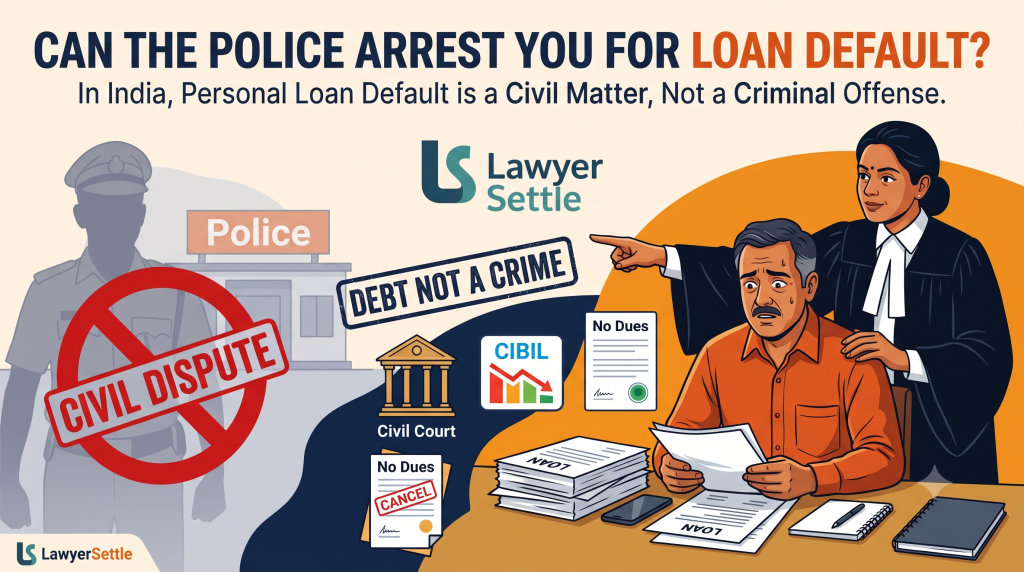
In India, defaulting on a personal loan is generally a civil matter and does not, by itself, constitute a criminal offence. The police have no legal authority to arrest a borrower merely for failing to pay loan EMIs.
Understanding how Indian law categorizes loan default, the narrow exceptions where courts intervene, and your rights under Reserve Bank of India (RBI) guidelines will help you protect yourself against unlawful intimidation.
Why Loan Default Is a Civil Matter?
When you take an unsecured personal loan, you enter into a commercial contract with a bank or Non-Banking Financial Company (NBFC). If you stop paying due to financial hardship—such as job loss, medical emergencies, or business distress—it is classified as a breach of contract, not a crime.
- No FIR for Non-Payment: Police cannot register a First Information Report (FIR) simply because an EMI was missed. The police deal with criminal offences, whereas contract breaches fall under civil jurisdiction.
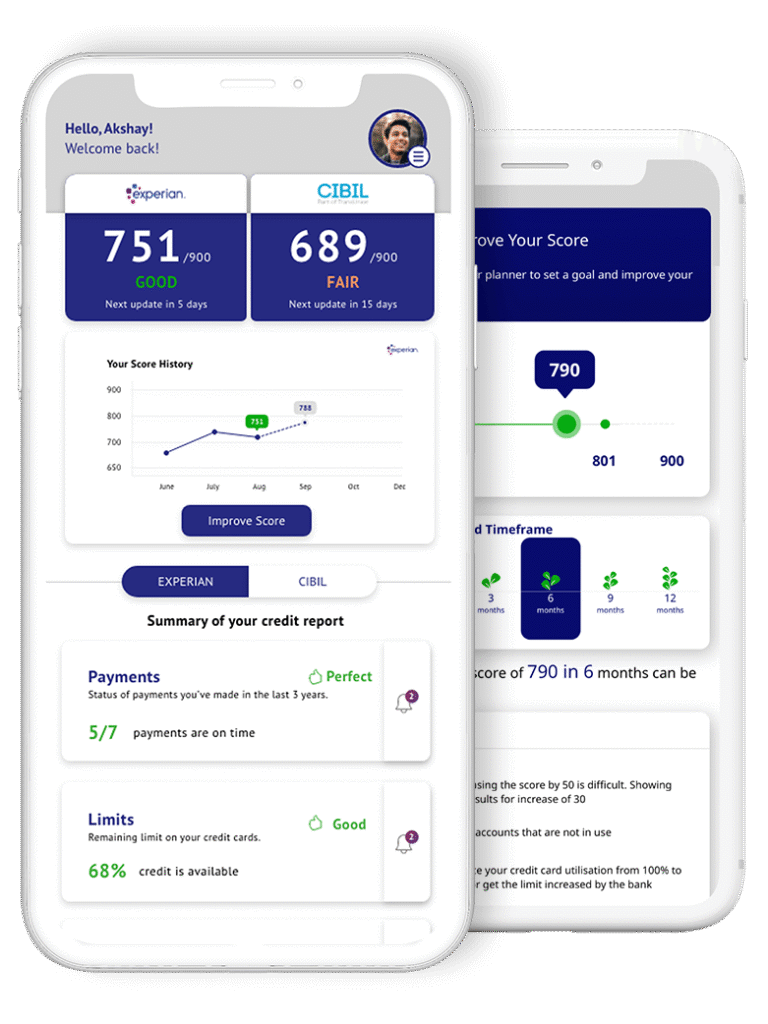
- Lender’s Legal Remedy: Lenders have the right to initiate civil recovery suits or debt recovery proceedings before a Civil Court or under the Commercial Courts framework. They can also report the default to credit bureaus (such as CIBIL, Experian, CRIF High Mark), which lowers your credit score.
What About the Arbitration Clause? Can It Lead to Arrest?
When signing a personal loan agreement, you likely agreed to an arbitration clause. This clause allows the bank or NBFC to resolve disputes through a private arbitrator rather than a traditional civil court.
Many recovery agents use arbitration notices to mislead borrowers into believing that an arbitral tribunal functions like a criminal court with powers to dispatch the police. Understanding the legal limits of arbitration clarifies what lenders can and cannot do:
- Zero Criminal Powers: An arbitrator is a civil adjudicator, not a criminal judge. They have no legal power to order an arrest, issue warrants, or involve the police.
- Unilateral Appointment is Invalid: The Supreme Court of India (Perkins Eastman case) has ruled that a lender cannot unilaterally appoint an arbitrator without post-dispute consent.
- Civil Execution, Not Jail: If you ignore the notice, the arbitrator may pass an ex-parte financial award against you. The lender must then file an execution petition in a civil court to recover dues (e.g., via bank account attachment)—not through imprisonment.
Exceptions: When Legal Proceedings Can Lead to Court Warrants.
While missing an EMI is not a crime, criminal or quasi-criminal proceedings can arise under specific statutory conditions:
Cheque Dishonour (Section 138 of the Negotiable Instruments Act).
If you issued post-dated physical cheques for EMI repayment that bounced due to insufficient funds, the lender can initiate proceedings under Section 138 of the Negotiable Instruments Act, 1881:
- This is a quasi-criminal proceeding.
- Even here, the police do not arrest you right away. The bank must issue a statutory demand notice giving you 15 days to clear the amount.
- If unpaid, the lender files a private complaint before a Judicial Magistrate. The court will first issue a summons.
- Where arrest occurs: If you repeatedly ignore court summons and bailable warrants, the Magistrate may issue a Non-Bailable Warrant (NBW) for contempt/non-appearance. In that scenario, police act solely on the court’s order to produce you before the judge – not on behalf of the recovery agency.
NACH / ECS Mandate Bounce (Section 25 of the PSS Act).
Digital mandate bounces (National Automated Clearing House / Electronic Clearing Service) fall under Section 25 of the Payment and Settlement Systems Act, 2007. This functions similarly to Section 138 proceedings: it requires statutory notice, court filings, and summons. Arrest only enters the picture if court directives are routinely ignored.
Threat Matrix: What Recovery Agents Say vs. What the Law Says,
| Common Recovery Threat. | Legal Reality under Indian Law. |
| We are filing an FIR at your local police station today. | Police will reject an FIR for pure loan default; it is a civil breach of contract. |
| Police officers are coming with us to seize your household items. | Police do not assist recovery agents. Seizure without a formal court decree is illegal. |
| Police do not assist recovery agents. Seizure without a formal court decree is illegal. | No one can be jailed without due court trial and judicial orders. Unilateral arrest is impossible. |
| Your PAN Card will be blocked. | Purely fictitious intimidation. |
RBI Guidelines: Protection Against Intimidation and Harassment.
The Reserve Bank of India strictly regulates debt collection methods. Regulated Entities (banks and NBFCs) and their recovery agents must follow the Master Directions on Fair Practices:
- No Impersonation: Recovery agents are strictly prohibited from impersonating police officers, advocates, or court officials. Threatening arrest or police raids constitutes harassment.
- Permissible Hours: Agents can only call or visit between 8:00 AM and 7:00 PM.
- Privacy and Dignity: Agents cannot contact your employers, colleagues, or relatives who are not co-borrowers or guarantors. Public humiliation or physical intimidation is strictly prohibited.
- Identification: Any visiting agent must show authorized credentials and a copy of the recovery authorization letter from the lending institution.
What Steps Should You Take If Threatened with Arrest?
- Document Every Interaction: Save threatening messages, WhatsApp chats, and call recordings. Note down dates, names, and contact numbers.
- Never Pay Cash to Agents: Do not hand over cash or transfer money to personal UPI accounts based on threats. All payments must go directly into your official loan account.
- File an Official Complaint:
- Write to the bank’s Principal Nodal Officer (PNO) detailing the agent’s misconduct and illegal arrest threats.
- If unresolved within 30 days, escalate the complaint to the RBI Banking Ombudsman via the online portal.
- Respond Promptly to Court Summons: If you receive a formal summons from a Magistrate Court regarding Section 138 (cheque bounce) or Section 25 (NACH bounce), do not ignore it. Appear through an advocate, secure bail (these matters are bailable), and request an out-of-court settlement or referral to the National Lok Adalat.
- Explore One-Time Settlement (OTS): If debt servicing is permanently unviable, approach the bank for a formal loan settlement to legally discharge the liability and close the account.